

If your child can recognise letters but still struggles to read simple words… you’re not alone.
Many children know their ABCs. They can sing the sounds. But when it’s time to blend them into actual words? Everything slows down.
Here’s the truth:
Reading isn’t about memorising hundreds of random words.
It’s about recognising patterns.
And that’s exactly why word families are one of the most powerful tools in early literacy.
Let’s explore why they matter — and how blending digraphs like ch-a-t can dramatically accelerate your child’s reading confidence.
What Are Word Families (And Why Are They So Powerful)?
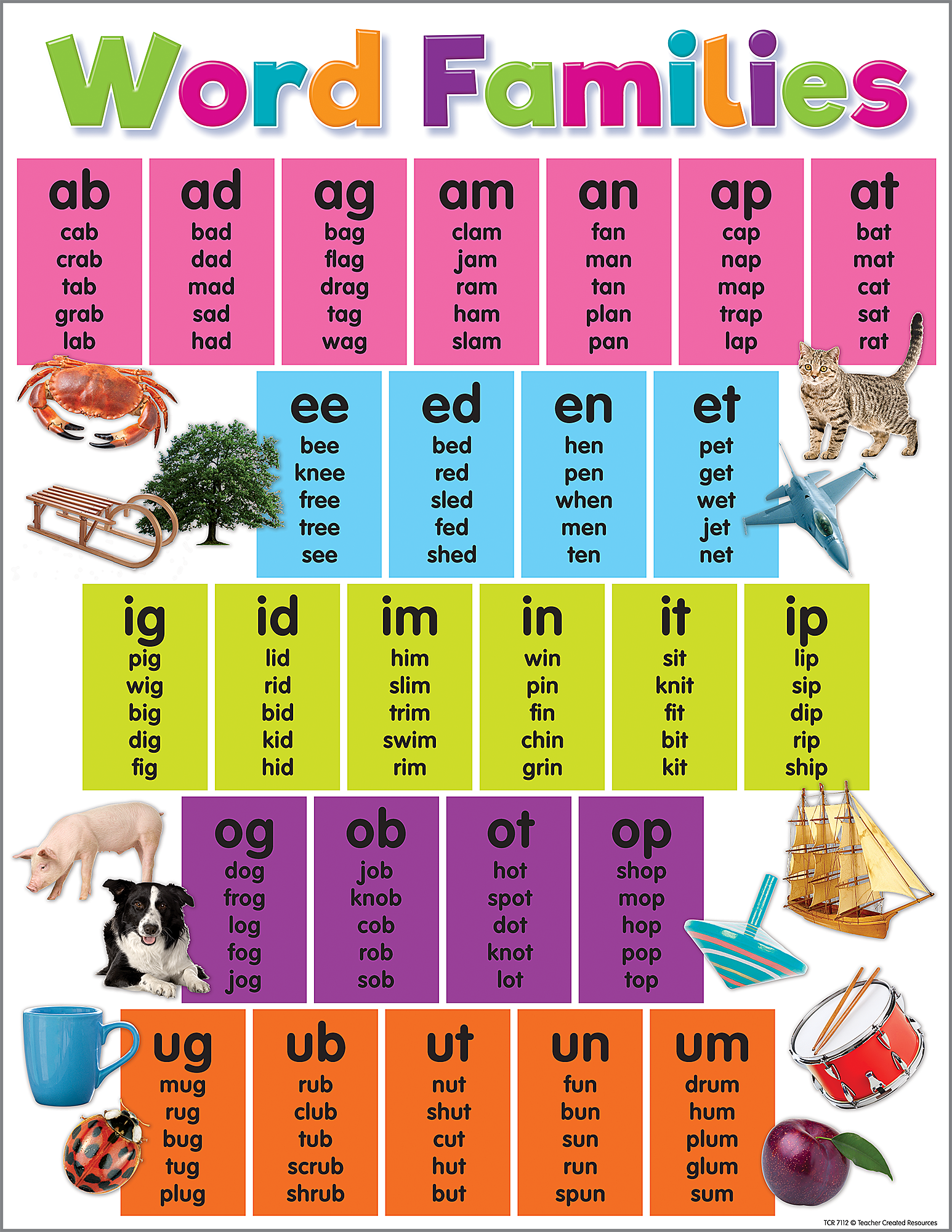
Word families are groups of words that share the same ending pattern.
For example:
-
-at family: cat, bat, hat, mat
-
-an family: can, fan, man, ran
-
-ap family: cap, tap, map
When children learn the pattern “-at”, they don’t just learn one word. They unlock many.
Instead of decoding each word from scratch, they recognise the chunk and apply it across similar words.
Research from the National Reading Panel shows that systematic phonics instruction — including teaching spelling patterns — significantly improves early reading outcomes (National Institute of Child Health and Human Development, 2000).
In simple terms?
Patterns reduce overwhelm.
Patterns build speed.
Patterns build confidence.
Why Memorising Sight Words Isn’t Enough
Some children are taught to memorise common words. While sight words are helpful, memorisation alone doesn’t teach decoding skills.
Strong readers are able to:
-
Break words into sounds
-
Blend sounds smoothly
-
Recognise common spelling patterns
-
Transfer those patterns to new words
Word families teach children how reading works — not just what words look like.
And that’s where my approach becomes even more effective.
My Unique Approach: Blending Through Digraph Awareness (Like “ch-a-t”)
Many children are taught to sound out each letter individually:
c – h – a – t
But that’s not how the brain processes sound patterns.
Instead, I teach children to recognise sound units.
For example:
ch – a – t
“Ch” is a digraph — two letters that make one sound.
When children learn to:
-
Identify digraphs as a single sound
-
Blend chunks instead of isolated letters
-
Recognise word family endings like “-at”
They read more fluently and with far less hesitation.
Literacy expert Dr. Louisa Moats explains that skilled reading requires efficiently mapping speech sounds to spelling patterns (Moats, 2020). Teaching digraph blending supports that exact process.
When a child sees chat, they don’t struggle through four disconnected sounds.
They see ch + at — two meaningful sound chunks.
That shift is powerful.
Why Word Families + Digraph Blending Accelerate Learning
When you combine:
✔ Word family awareness
✔ Digraph recognition
✔ Structured blending practice
✔ Repetition through engaging activities
You help children:
-
Decode faster
-
Avoid guessing
-
Improve fluency
-
Build true reading independence
Instead of relying on memory, they rely on understanding.
And understanding creates confident readers.
Supporting Your Child with Structured Practice
If you’re looking for a practical way to teach this effectively at home or in the classroom, I created a resource designed exactly for this purpose.
👉 Word Family Short Vowel A Activity Sheets
This activity book focuses on:
-
Short vowel A word families
-
Pattern recognition
-
Blending practice
-
Hands-on reinforcement
-
Clear, structured progression
You can explore it here:
https://www.thelittlelights.com.sg/products/word-family-short-vowel-a-activity-sheets
It’s designed to help children move from slow decoding to smooth, confident reading — step by step.

Final Thoughts: Reading Is Built on Patterns
When children understand word families, reading becomes predictable.
When they recognise digraphs as sound units, blending becomes smoother.
When blending becomes smoother, confidence grows.
And when confidence grows?
So does their love for reading.
Because the goal isn’t just to teach children to read.
It’s to help them feel successful while doing it.
References (APA Style)
Moats, L. C. (2020). Speech to print: Language essentials for teachers (3rd ed.). Paul H. Brookes Publishing Co.
National Institute of Child Health and Human Development. (2000). Report of the National Reading Panel: Teaching children to read. U.S. Government Printing Office.


